
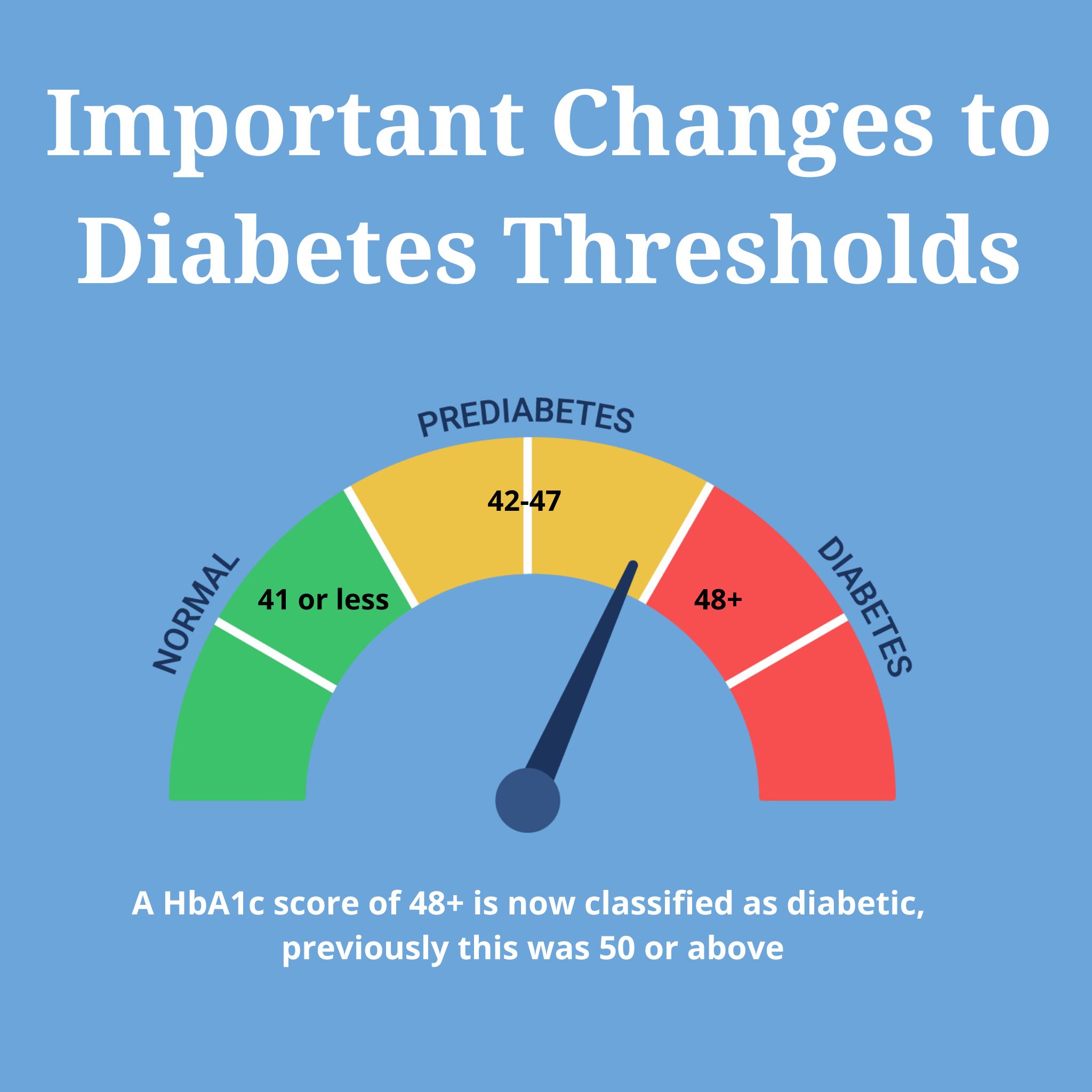
From 1 April 2026, New Zealand is updating how we classify prediabetes and diabetes using the HbA1c blood test (also called glycosylated haemoglobin). This change brings us in line with most other OECD countries and is part of a wider national plan to improve diabetes prevention and care.
How HbA1c results will be classified
HbA1c is a blood test that shows your average blood glucose (sugar) level over the past 2–3 months. From 1 April 2026, we will be using the following categories for HbA1c:
- Normal (not diabetic): HbA1c of 41 mmol/mol or lower.
- Prediabetes (increased risk): HbA1c between 42 and 47 mmol/mol.
- Diabetes: HbA1c of 48 mmol/mol or higher (this threshold was previously 50 mmol/mol in New Zealand).
As always, the aim with diabetes is to keep your HbA1c as low as is safely possible. If you are diabetic, an HbA1c of 53 mmol/mol or less is generally considered a good control point for many adults, although individual targets can differ.
What this change might mean for you
Because the diabetes threshold is moving from 50 to 48 mmol/mol, a small number of people who were previously prediabetic will now be considered to have diabetes. You can reach out to us to discuss what this means and whether any changes to your care are needed.
If your result is in the prediabetes range (42–47), this means you are at increased risk of developing type 2 diabetes in the future. This is an important warning sign but also a chance to act early and reduce that risk.
For both prediabetes and diabetes, lifestyle changes are the foundation of good management. These usually include:
- Reducing sugar and refined carbohydrates in your diet.
- Being more physically active in a way that is safe for you.
- Achieving and maintaining a healthy weight (including weight loss if needed) where possible.
We use medication on top of these lifestyle changes to reduce the consequences of having diabetes.
Your Local Health team is here to help you achieve good health and appropriately manage your diabetes risk. If you’re concerned or have questions, please book an appointment with your Local Health team to talk it through.

